
Blog Details
- Home
- Federal AI Procurement: Buy Outcomes, Not Just Tokens
Dynamic Software Solutions is a complete solutions provider that has been providing custom software services since 1987.
Company Address
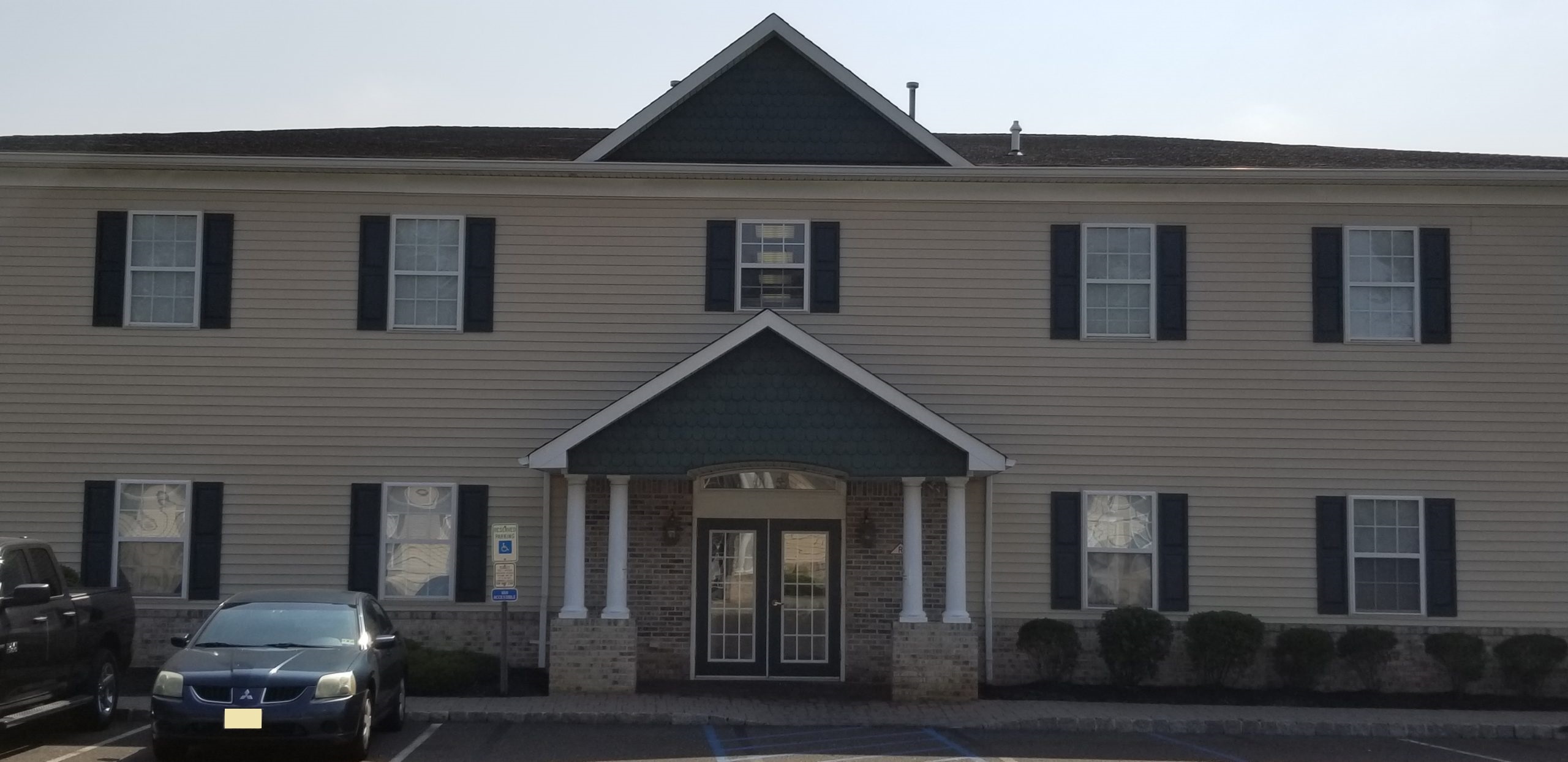
Dynamic Software Solutions is a complete solutions provider that has been providing custom software services since 1987.

How Federal Agencies Can Turn Discounted AI Into Mission Value
TL;DR
Introduction
The most consequential number in a federal AI purchase may not be the discount. It may be what the agency spends to produce one useful, reviewed, acceptable result.
On October 27, 2026, the General Services Administration announced an expanded OneGov agreement with Anthropic: a 40% discount on token-based usage across Claude models available to government, with no minimum purchase required. GSA framed the agreement as part of a shift from evaluating AI to applying it in daily mission work.
For contracting officers, program managers, and federal implementation partners, that shift creates a more demanding purchasing question.
Not simply: What does access cost?
Instead: What does dependable execution cost, and how will the agency prove it?
The recommended response is not to reject consumption pricing. Pair it with outcome-based evaluation, explicit operating limits, and a credible exit plan.
1. What the OneGov Agreement Changes — and What Buyers Should Verify
GSA’s announcement identifies three principal features: discounted consumption-based access, no minimum orders, and multiple ordering paths. It describes access for the federal executive, legislative, and judicial branches, as well as eligible state, local, and tribal governments. In addition, the announcement references FedRAMP-authorized environments for sensitive unclassified work.
Those details make the announcement significant. However, they do not, by themselves, answer every product-level acquisition question.
GSA’s announcement makes an important distinction. They describe availability directly, through resellers, and on major cloud platforms. Anthropic’s accompanying announcement says the expanded discount applies to direct purchases immediately and through cloud providers “in the coming months.” Anthropic also identifies GSA’s Multiple Award Schedule as a purchasing route. Buyers should therefore verify current channel availability, rather than assume every route is operational on the same timetable.
Before issuing an order, request written confirmation of:
2. Measure the Cost of Accepted Work, Not Just Consumption
A lower usage rate answers a narrow question: what is the price of a billable unit? It doesn’t establish whether the resulting work meets the agency’s needs.
For evaluation purposes, use a broader measure:
Cost per accepted outcome = total attributable delivery cost ÷ accepted outcomes
Define both sides before the pilot begins.
Total attributable cost should include the expenses relevant to the proposed deployment: model usage, platform charges, integration, operations, human review, rework, and security administration. “Accepted outcome” should mean a work product that passes a documented quality threshold — not merely a generated response.
For a document-review pilot, for example, evaluate whether the output:
This is a proposed evaluation framework, not a claim about any vendor’s measured performance.
The distinction matters commercially. A supplier should be able to explain how its design improves the completed workflow, not simply demonstrate that it can produce text. Federal buyers should ask for the assumptions behind the business case and test them against representative work.
Avoid equating time released with cash savings. Report labor capacity, service improvements, and actual budget reductions separately.
3. Plan the Transition Before the Pilot Ends
Recent HHS procurement reporting illustrates why continuity belongs in the initial acquisition discussion.
HHS announced an intent to award Anthropic a limited continuity-of-services contract to maintain existing Claude deployments while pursuing a competitive multiple-award blanket purchase agreement. The reporting describes a proposed bridge arrangement; it does not establish that an award was completed or that the procurement was improper.
The practical lesson is clear: define what happens after evaluation before the evaluation becomes operationally important.
For federal buyers, the pilot plan should answer:
For contractors, demonstrate portability rather than promise it. Consider including an export exercise and a transition walkthrough among pilot deliverables.
This does not require pretending that every model or platform is interchangeable. It requires making dependencies visible enough for the agency to price and manage them.
4. Agentic AI Makes Acceptance Criteria More Important
The procurement discussion is widening beyond conversational assistants.
Google’s October 20 announcement introduced Gemini for government services, with procurement and compliance support among its described capabilities. Google says the offering can help cross-reference vendor submissions against solicitation requirements and support auditable decision justifications. FedScoop reported that the offering was in preview. These are announced capabilities, not independent proof of performance in a specific agency environment.
For buyers evaluating such functions, the recommended question is not “Can the agent do more?” It is “Which actions may it take, under what conditions, and who accepts the result?”
Require the proposed workflow to distinguish among:
A vendor demonstration should show exception handling as clearly as the successful path. Ask what happens when evidence conflicts, a required source is missing, or the system cannot support a conclusion.
Going forward, federal AI procurement evaluations should place greater emphasis on the whole operating model: task quality, permissions, review requirements, cost controls, and recoverability. That is a purchasing recommendation, not a prediction that a new government-wide mandate has already been adopted.
Actionable Takeaways
For contracting and acquisition teams
Program and technology leaders
Federal contractors
Lead with the mission workflow and its acceptance criteria. Show the agency how the proposed solution will be implemented, governed, measured, and supported — not just which model it uses.
Conclusion
GSA’s Claude agreement offers a concrete purchasing benefit: a 40% discount on eligible token-based usage, with no minimum purchase requirement.
The stronger acquisition strategy is to turn that benefit into measurable operational value.
Start with a bounded workflow. Define a satisfactory result. Measure its full delivery cost. Preserve the ability to change course.
The objective should not be the cheapest generated response. It should be dependable mission work at a defensible total cost.
Build Mission-Ready AI Solutions with DSS
Dynamic Software Solutions provides AI and custom software solutions, combining business analysis and implementation with AI-native capabilities powered by Perceive Now. Its approach focuses on efficient workflows and measurable ROI.
DSS uses flat-fee pricing, not token-based consumption pricing, giving customers a defined fee rather than charges that fluctuate with token usage. For federal teams, that creates a clear distinction between discounted consumption pricing and a flat-fee engagement whose scope and deliverables can be evaluated against mission requirements. Explore DSS’s GSA capabilities.
Trey Fox
Trey Fox is a Contract Specialist and communications professional specializing in government contracting, technical strategy, and public sector solutions at Dynamic Software Solutions. Holding a Master of Journalism from Temple University and a B.A. in Political Science from Rutgers, Trey’s background spans radio broadcasting, interviewing, and cross-industry content creation across sports, tech, and culture.
Recent Posts
Recent Comments
About Me
Trey Fox
Trey Fox is a Contract Specialist and communications professional specializing in government contracting, technical strategy, and public sector solutions at Dynamic Software Solutions. Holding a Master of Journalism from Temple University and a B.A. in Political Science from Rutgers, Trey’s background spans radio broadcasting, interviewing, and cross-industry content creation across sports, tech, and culture.
Popular Post
Federal AI Procurement: Buy Outcomes, Not Just
November 2, 2026GSA Multiple Schedule Award (MAS) Contractor
August 3, 2026Popular Categories
Instagram Feeds
[instagram-feed]
Popular Tags
Archives