

Contact Us
Overview
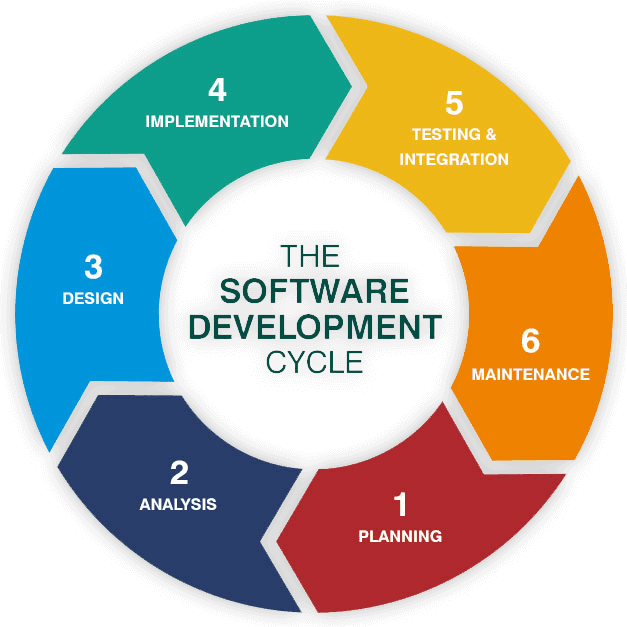
Dynamic Software Solutions implements a variety of processes to meet the needs of its diverse clientele. It utilizes a step-by-step process that includes six key elements. While technology continues to evolve and our company adapts to those changes, these steps have proven to be incredibly valuable. On this page, you will gain insight into this successful approach.
Planning
In order to properly scale or deliver on any project, one must develop a blueprint. The planning stage is one of the more important aspects of the Software Development Cycle. We meet with clients to clearly define goals and expectations, and determine the scope that they would like the project to achieve. We discuss the client's budget and detail every foreseeable expense both short-term and long-term, also taking into consideration any obstacles to completing the process successfully while envisioning how to allow for corporate growth. We also establish a realistic timeline and work to ensure an accurate delivery.
Planning
Successful project delivery begins with a detailed planning phase. This involves creating a blueprint by working with clients to define goals, expectations, and project scope. The process also includes reviewing the client’s budget, outlining short- and long-term costs, identifying potential obstacles, planning for future growth, and establishing a realistic timeline to ensure accurate and successful delivery.
Analysis
In order to ensure that the software is developed properly, we implement a rigorous analysis process which includes uncovering the ins and outs of the client's goals in minute detail so that there aren't any missing elements upon completion of the project. This step requires thoroughness to fully understand the client's vision, learning some of their business workflows and gaining insight into not only their most critical processes but also lesser tasks which we might be able to optimize as we develop their software. Since we use an iterative approach, we continue analyzing various tasks throughout the process as we discuss various milestones, current tasks and next steps to complete a project. One thing which we must note is that we often learn enough about a business and its objectives to provide suggestions for improvements in the design or even workflows that exist outside of the application to make our clients’ operations more efficient.
Analysis
To ensure proper software development, a detailed analysis phase is conducted to thoroughly understand the client’s goals, workflows, and operational processes. This helps prevent missing elements and identify opportunities for optimization. Using an iterative approach, analysis continues throughout the project as milestones and tasks are reviewed. The process often provides insights that allow recommendations for improving both the software design and broader business workflows to increase efficiency.
Design
This process is incredibly vital to the development cycle. We conceptualize how the project will proceed, end, and then structure it. After it is conceptualized, we then construct each component to ensure that they are visually appealing, innovative, unique, and functional. Once each element of the design is determined, we will proceed with their development.
Design
This stage is critical to the development cycle, focusing on conceptualizing the project’s structure and final outcome. Each component is then designed to be visually appealing, innovative, unique, and functional. Once the design elements are finalized, development begins.
Implementation
This process is the heart of the cycle. We craft and develop the code so that it is able to meet the demands of the design structure. This process includes determining the various technologies, frameworks and platforms used to develop the software, version control, continuous integration (CI/CD) and deployment strategies, and each component needed for building the code is developed and tested in several stages before being deployed to production. We typically use an Agile approach in which we define various milestones, user stories, tasks and their relationship with each other, and we write all code in a performant manner so that it is reusable and highly scalable.
Implementation
This stage is the core of the development cycle, where code is created to fulfill the design requirements. It involves selecting the appropriate technologies, frameworks, and platforms, as well as implementing version control, CI/CD, and deployment strategies. Using an Agile approach, the work is organized into milestones, user stories, and tasks. Code is developed and tested in stages to ensure it is efficient, reusable, and scalable before being deployed to production.
Testing & Integration
Once each user story or task is completed, we test them thoroughly to ensure that they are satisfying their acceptance criteria. We are able to detect any issues and guarantee that the code is functioning properly, and we test everything across multiple device types and resolutions. We also make sure that the implementation of the product design meets the established standards of the client while also adhering to the latest worldwide standards and best practices. It is important to be thorough during this process.
Testing and Integration
After each user story or task is completed, it undergoes thorough testing to ensure it meets its acceptance criteria and functions correctly. This includes identifying issues, verifying performance across multiple devices and resolutions, and confirming that the implementation aligns with the client’s design standards as well as current global best practices.
Maintenance
The final stage of the Software Development Cycle cannot be understated. It involves determining a plan to either hand off the administration of the application to the client or to establish a plan to ensure that it is backed up, its host server is updated in regard to security and technical updates, etc. This step could also include discussion of future enhancements to the design, increased functionality for the consumer, etc. It is necessary to ensure that the software can be adapted to various changes that might need to be made, but as previously mentioned, we always keep future growth of the application into consideration.
Maintenance
The final stage of the Software Development Cycle focuses on deployment and long-term maintenance. This includes either transferring application administration to the client or establishing ongoing management for backups, security, and server updates. It may also involve planning future enhancements and expanded functionality while ensuring the software remains adaptable and capable of supporting future growth.